Doom: The Dark Ages
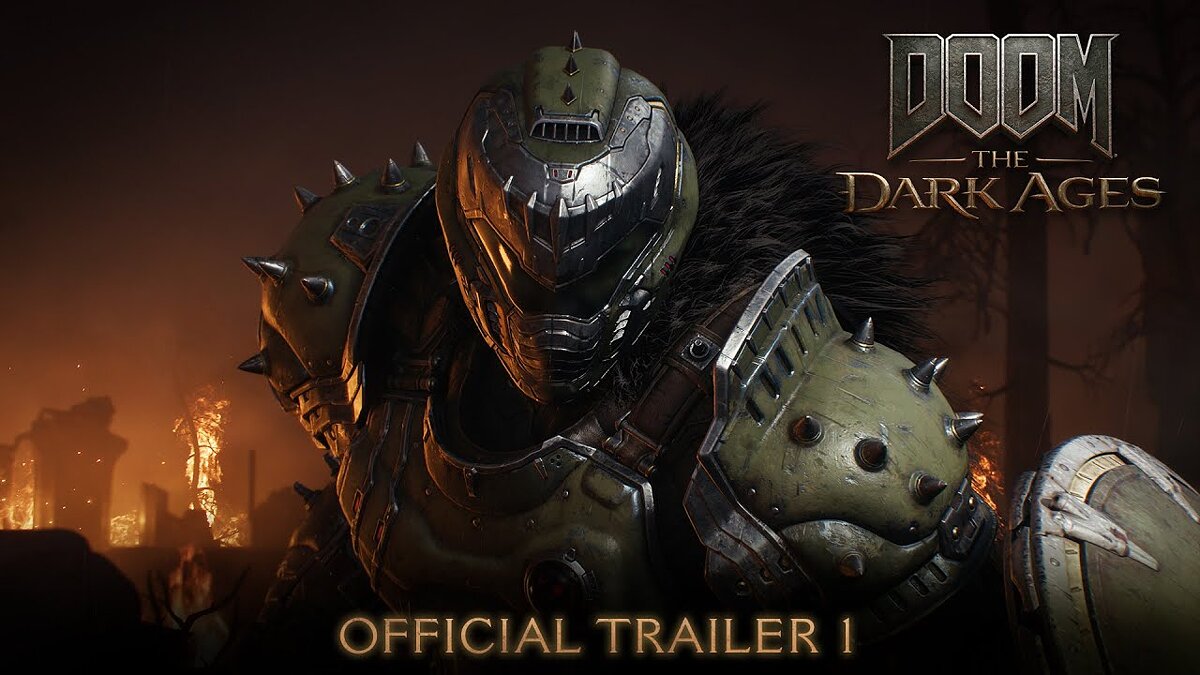
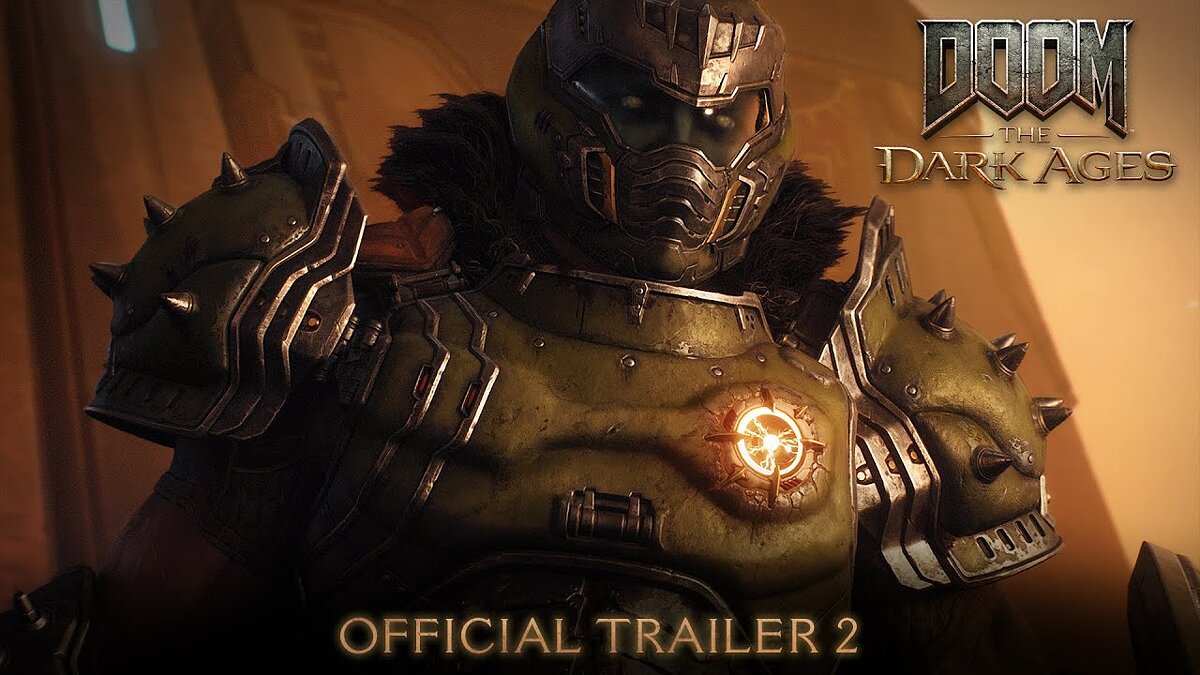


Doom: The Dark Ages is a single-player first-person shooter with action elements, set in a dark medieval fantasy world. It is the third game in the modern Doom... Read more
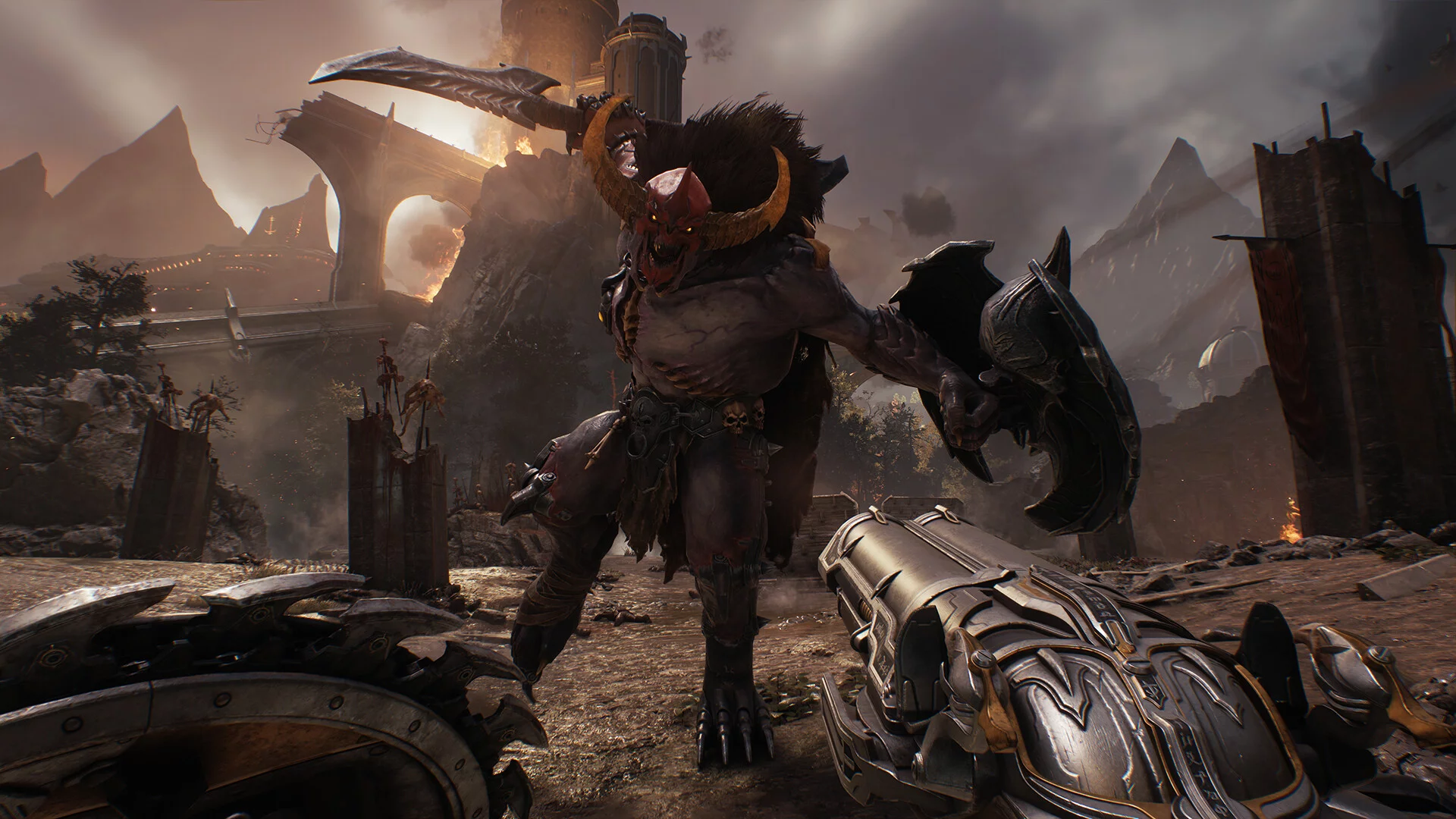
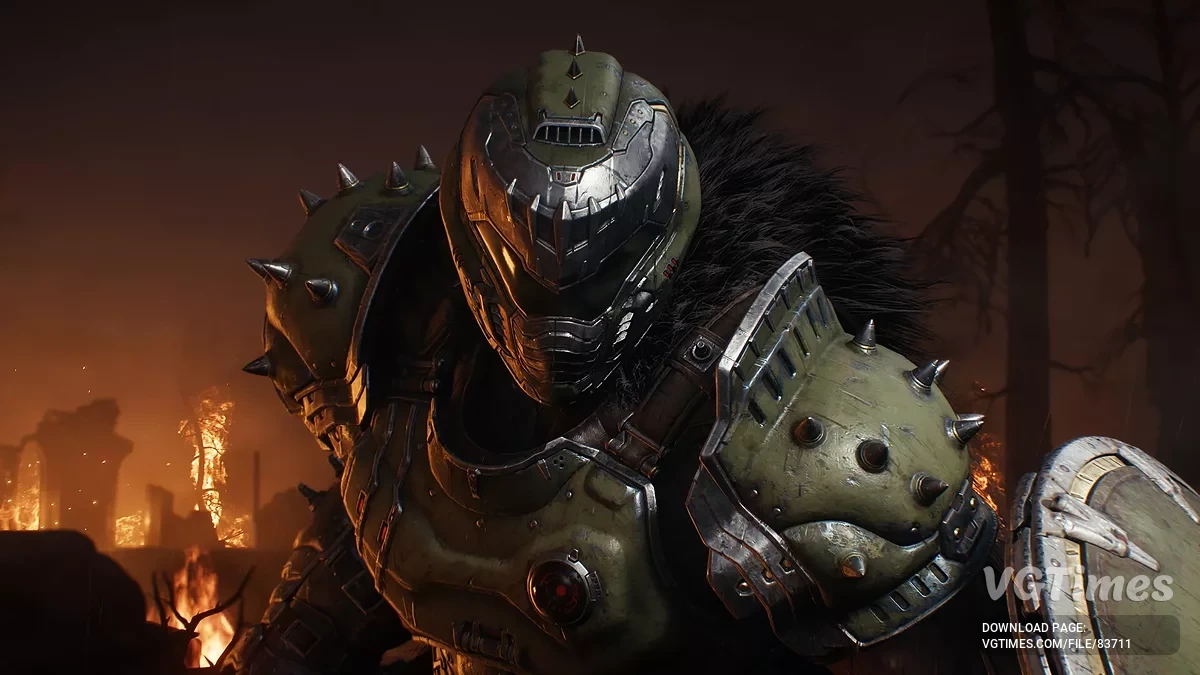
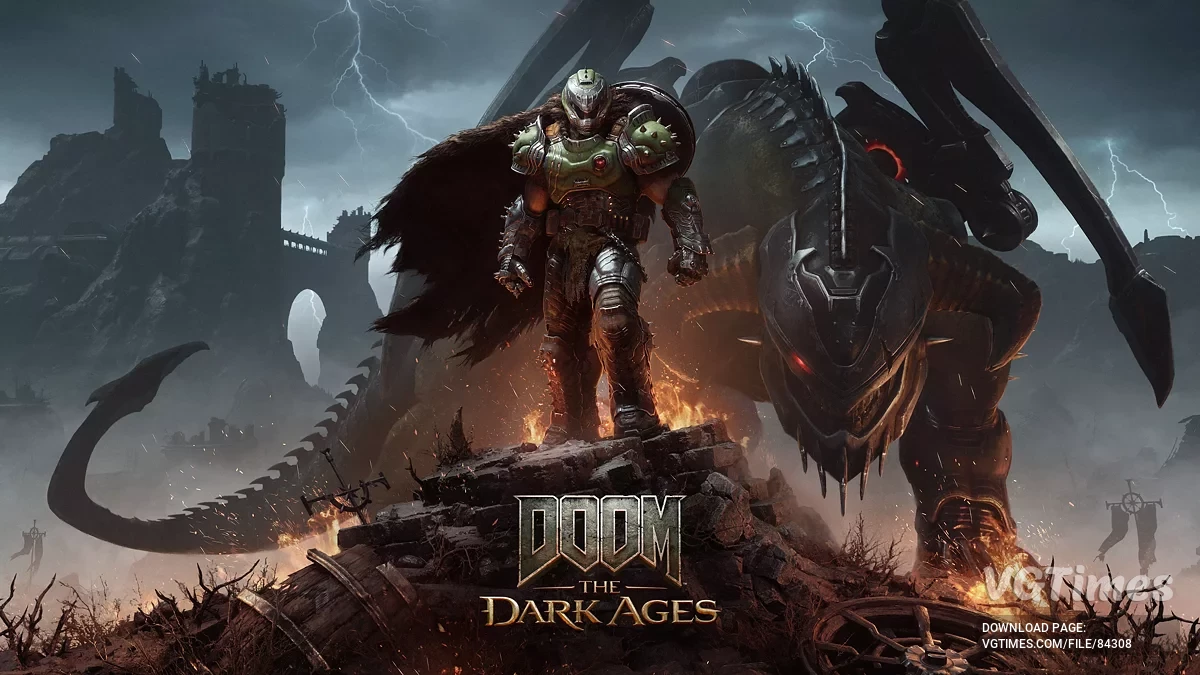
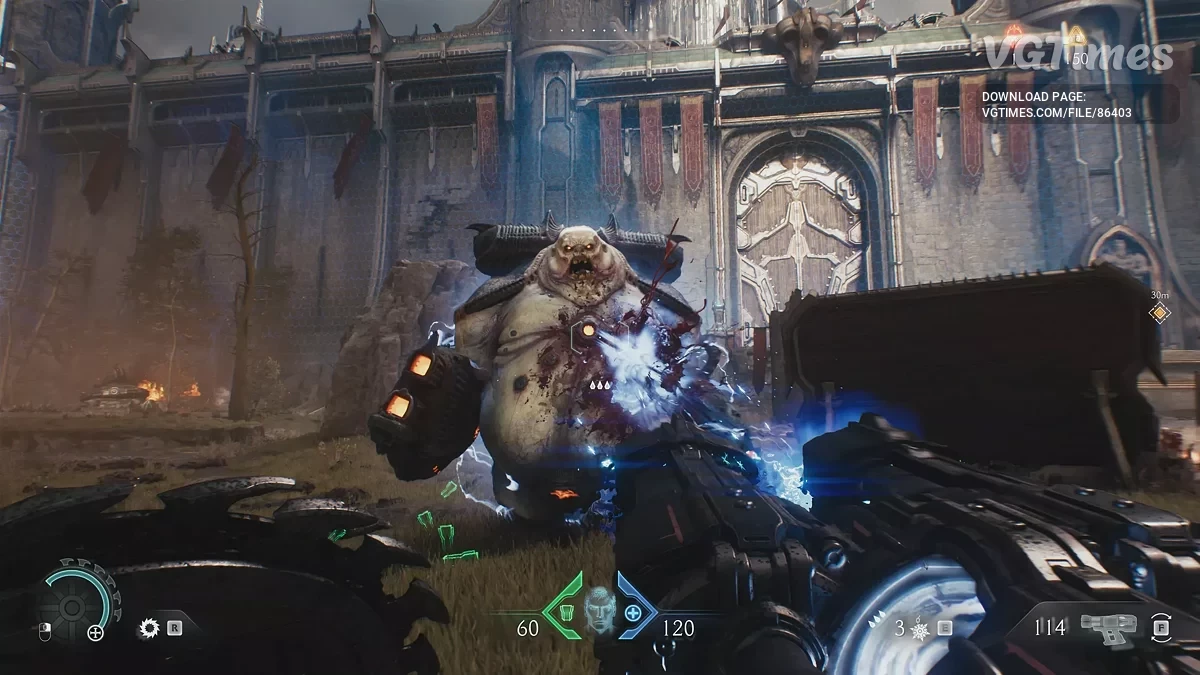
Doom: The Dark Ages is a single-player first-person shooter with action elements, set in a dark medieval fantasy world. It is the third game in the modern Doom series, serving as a prequel to Doom (2016) and Doom Eternal (2020). The story focuses on the early life of the Doom Slayer and the events described in Eternal — the confrontation with the forces of Hell on the planet Argent D'Nur. It stands out from its predecessors with heavy combat, almost complete absence of platforming and parkour, and a measured pace. The Doom Slayer brutally deals with enemies: he slashes them, crushes them with a mace, parries blows with a shield, flies on a cyber-dragon, and crushes demons while controlling a giant mech-robot.
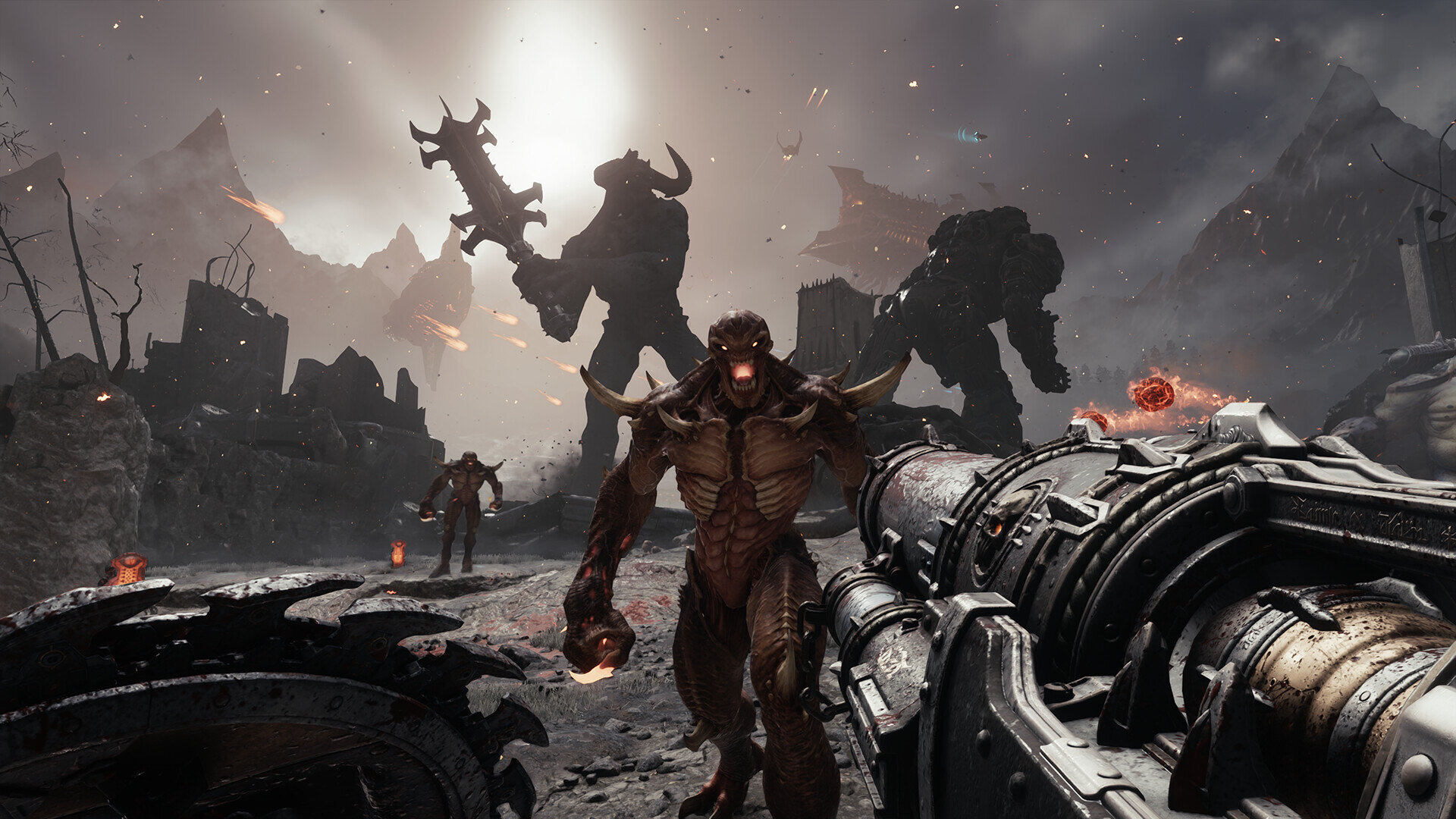
The game runs on the idTech 8 engine, which significantly improved the visual component compared to previous installments in the series. "Out of the box," it features ray tracing, 4K resolution, highly detailed textures, realistic lighting, and rich visual effects with brutal finishing animations. All this is accompanied by good game optimization and stable frame rates.
The backstory of events
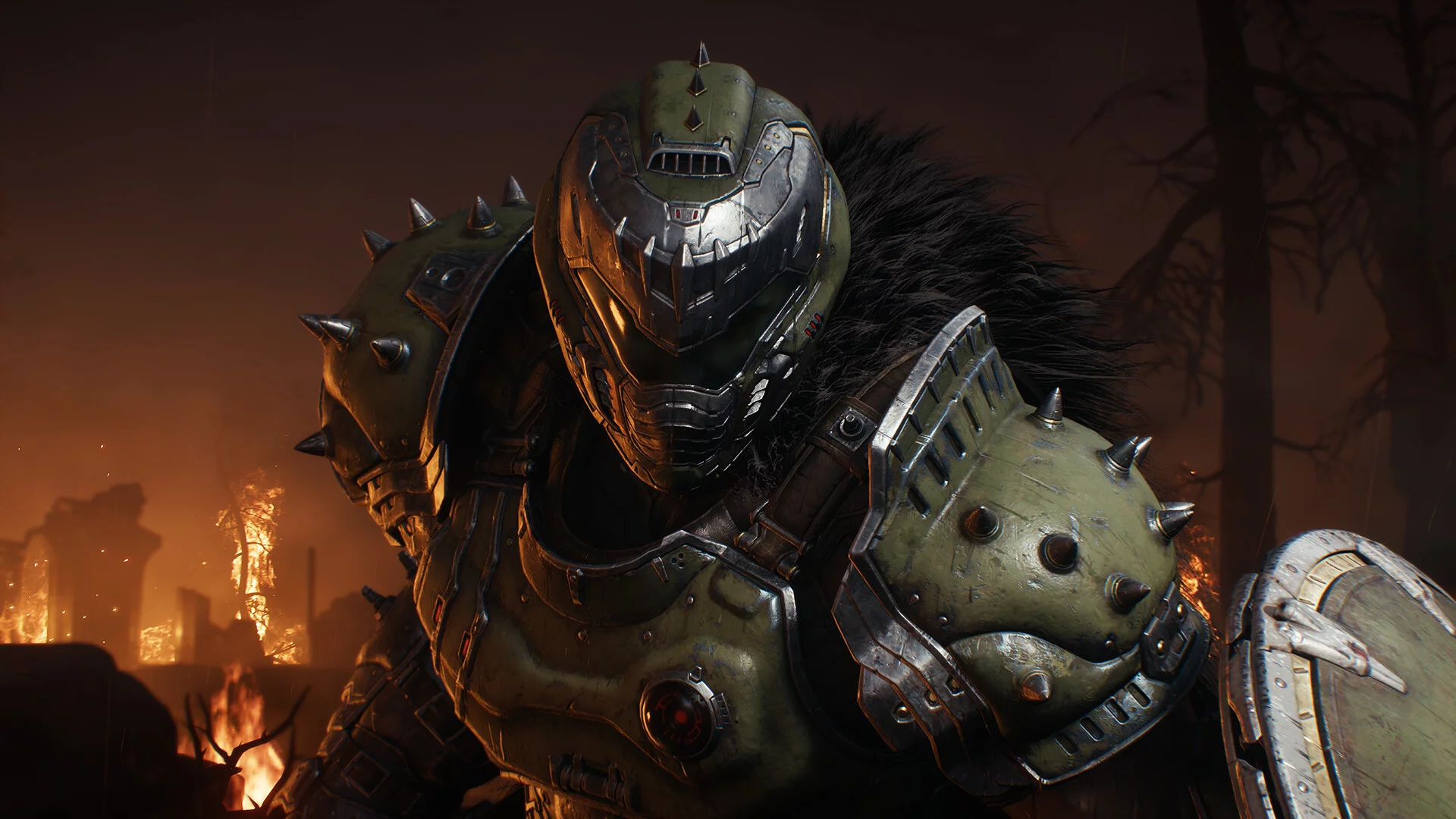
The events of The Dark Ages reveal a new chapter in the lore of Doom, previously only mentioned in Eternal. In ancient times, the world of Argent D'Nur, inhabited by humanoid beings and under the rule of angels, waged holy conquests, conquering one dimension after another. Everything changed when their armies clashed with Hell. A brutal massacre began: even the resilient Night Sentinels, elite warriors of Argent, barely withstood the onslaught of countless demons. Argent D'Nur — a technological civilization with a pronounced medieval aesthetic — found itself embroiled in a grueling war against a demonic invasion.
And then the Doom Slayer appeared. At that time, he did not yet bear the title. Some knew him as an ordinary marine, others as Doomguy. According to legends, he wandered between dimensions, exterminating demons and cleansing entire worlds until one day he found himself on a planet with the Night Sentinels. How he moved between dimensions is unknown, but during a joint battle with demons, he impressed the warriors of Argent so much that they took him with them to their home planet and welcomed him into their ranks.
The game world
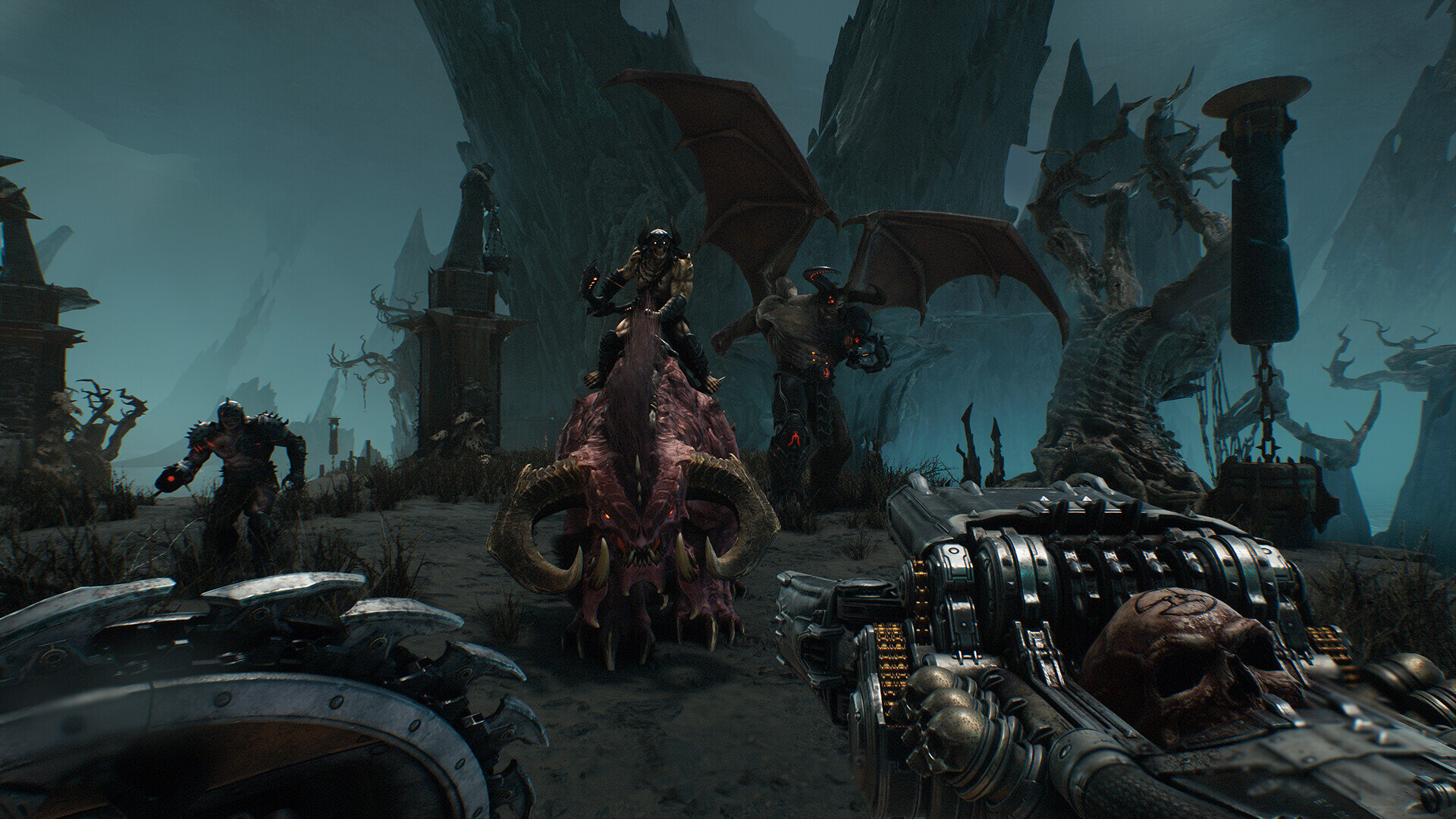
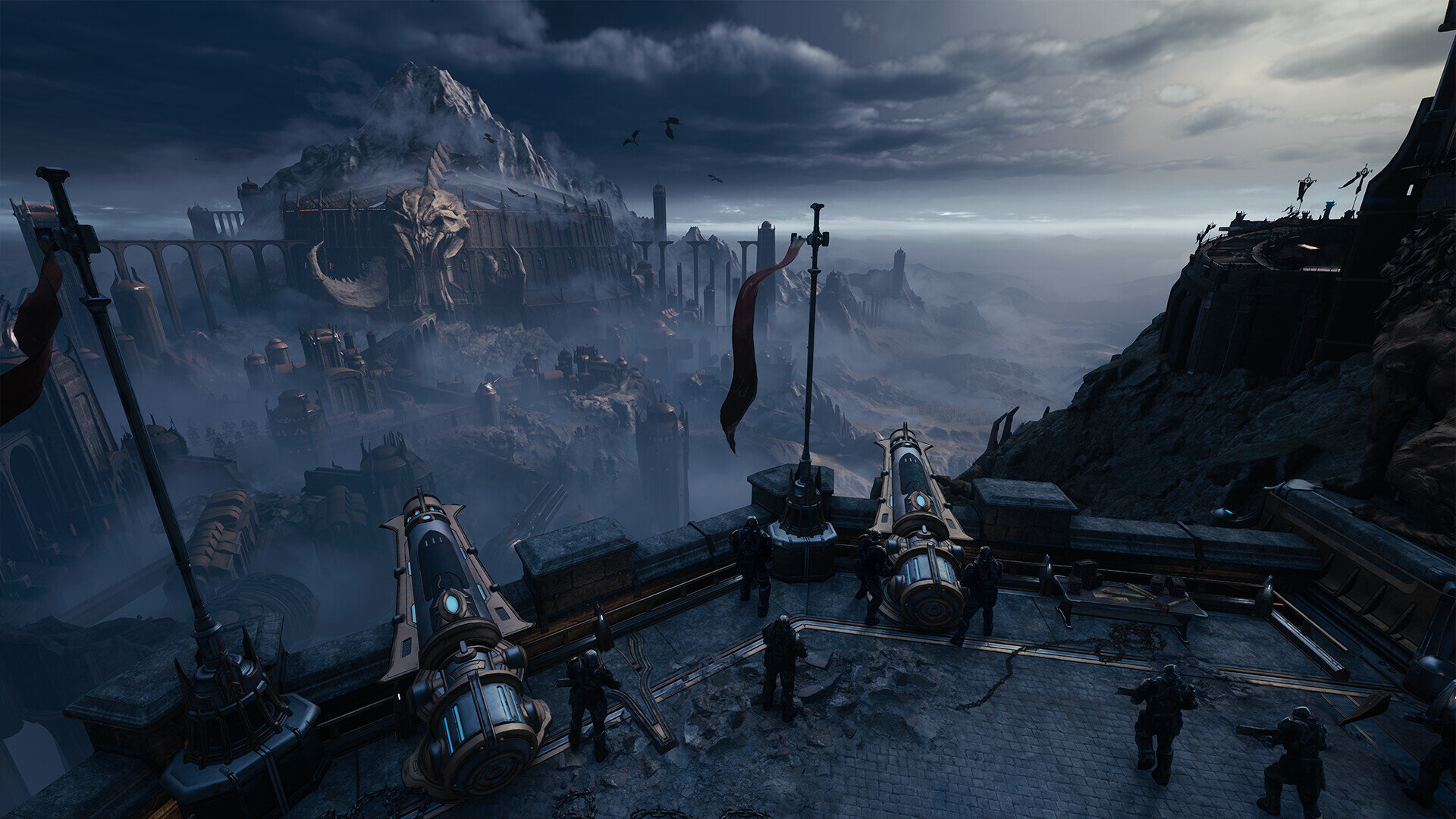
The Dark Ages expands the traditional Doom formula, emphasizing exploration and spatial orientation. The levels have become larger, their structure more open and filled with nonlinear routes. Players will need to search for keys (blue, red), decipher "golden paths" — hidden optimal routes — and find secrets not marked on the map. Most of the time will be spent on the demon-sieged planet Argent D'Nur: among ruined castles, battlefields, dark forests, and ancient hellish landscapes. At the same time, the game also offers new, unusual locations, such as Space Reim — a world with Lovecraftian motifs and dark architecture.
Due to the increased scale of arenas, the developers have raised the density of enemies: now victory requires not only accuracy and aggression but also the ability to use the environment. For example, a player can smash a barricade with a shield to open a path to resources or find a detour. The importance of spatial control increases: one must move wisely, split the crowd, and avoid being surrounded by enemies. Levels are often divided into contrasting acts — from narrow dungeons to wide battlefields. This gives the gameplay a dynamic structure and allows the player to choose how to reach the goal.
The plot and staging
The Dark Ages reveals the mysteries of the past of the Executioner of Rock, which were only mentioned in Doom and Eternal. The story begins with an unnamed marine being captured by the Mykros — a powerful race that appears benevolent but is actually very frightened by his destructive power. Seeing him as a weapon against Hell, they send him to Argent D'Nur — the homeland of the Night Sentinels.
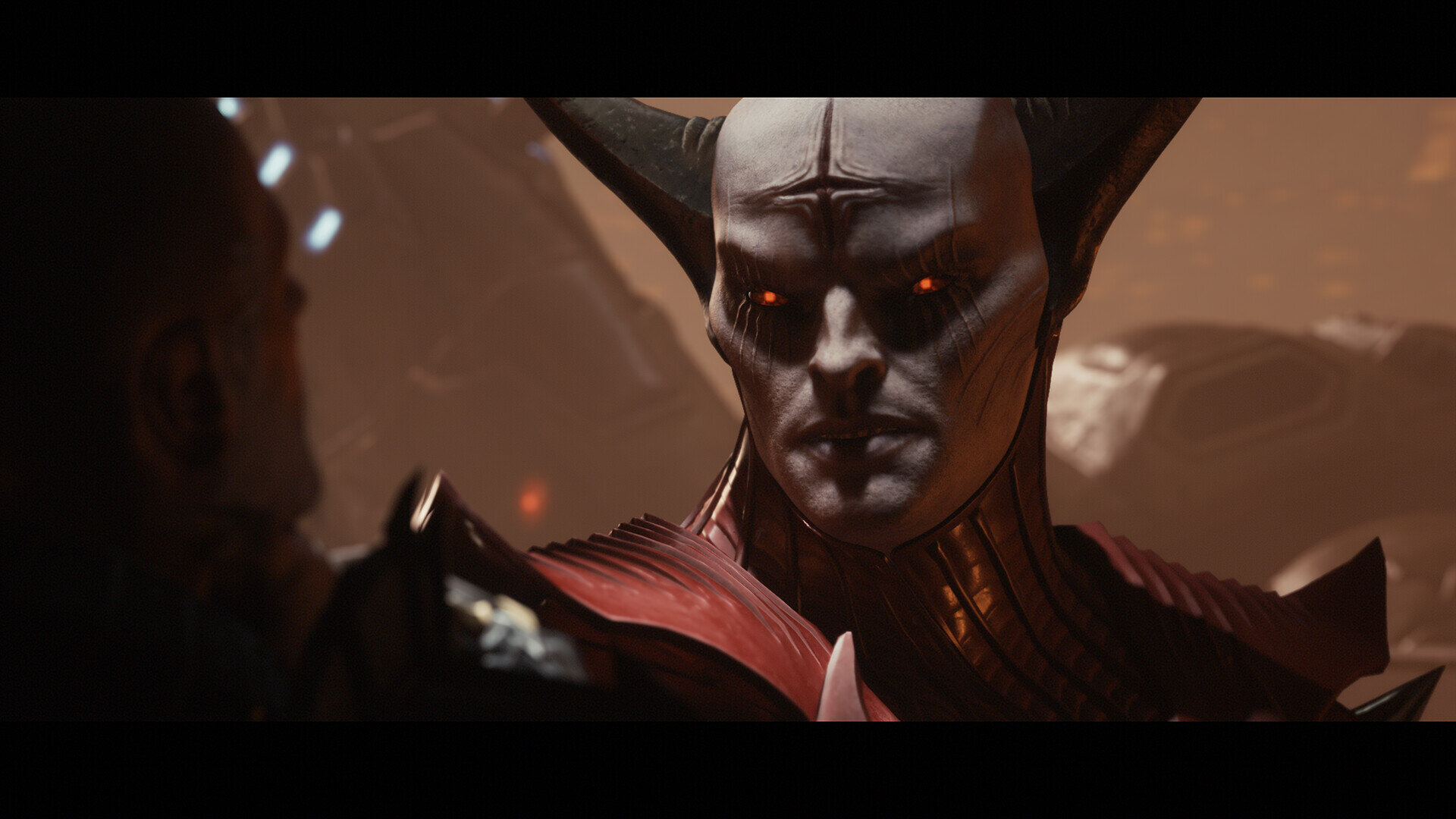
The main story covers the period of the Sacred Wars — a fierce confrontation between Argent and the armies of Hell, led by the demonic prince Ahzrak. Initially, the Executioner fights under the control of the Mykros — through a Tether device that limits his will. But at a crucial moment, he breaks free from the influence, is reborn in a new form, and leads a counteroffensive, trying to save the doomed planet.
The narrative shows the path of the Executioner from an ordinary warrior to a mythical figure that will be feared even in the Abyss. As events unfold, betrayal within the ranks of the Night Sentinels and the tragedy behind the fall of Argent D'Nur are revealed. Important roles in the plot are played by the leaders of the Sentinels — King Novik, commanders Tyra and Valen, each of whom is connected in their own way to the fate of the Executioner and the unfolding catastrophe.
The focus of the narrative has shifted towards visual presentation. The main milestones of the Executioner's biography and the story of his allies — Novik, Tyra, and Valen — are now revealed through a system of cutscenes, while the details of the lore are still thoroughly outlined in the codex entries. This makes the plot more understandable, structured, and emotionally rich.
Gameplay innovations
The Dark Ages changes the vector of dynamics: the vertical gameplay and acrobatic jumps of Eternal are replaced by devastating ground power. The Executioner now feels not just like a fast fighter but an unstoppable "heavy train." Thanks to the new sprint mechanic, he gains immense speed, breaking through enemy lines with inertia and weight.
The combat system has become more straightforward. Instead of constant resource management and juggling the arsenal — focus on positioning, dodging projectiles, and effectively using the shield in the heat of battle. The role of melee combat has significantly increased, showcasing the unprecedented physical strength of our subject.
The glory kill system has also been optimized: execution animations have become shorter and more brutal. This allows for maintaining a high pace of battle and instantly switching between targets, turning the fight into a continuous flow of rage. In Eternal, during such moments, the player would fall out of the flow for a couple of seconds.
The Dark Ages Weapons
The Executioner's Arsenal includes 12 types of destructive firearms, featuring both futuristic novelties and legendary classics — the super shotgun and rocket launcher. The traditional BFG has been replaced by a ballistic crossbow (BFC) — a monumental weapon that fires energy spears capable of destroying entire groups of demons with a single explosion.
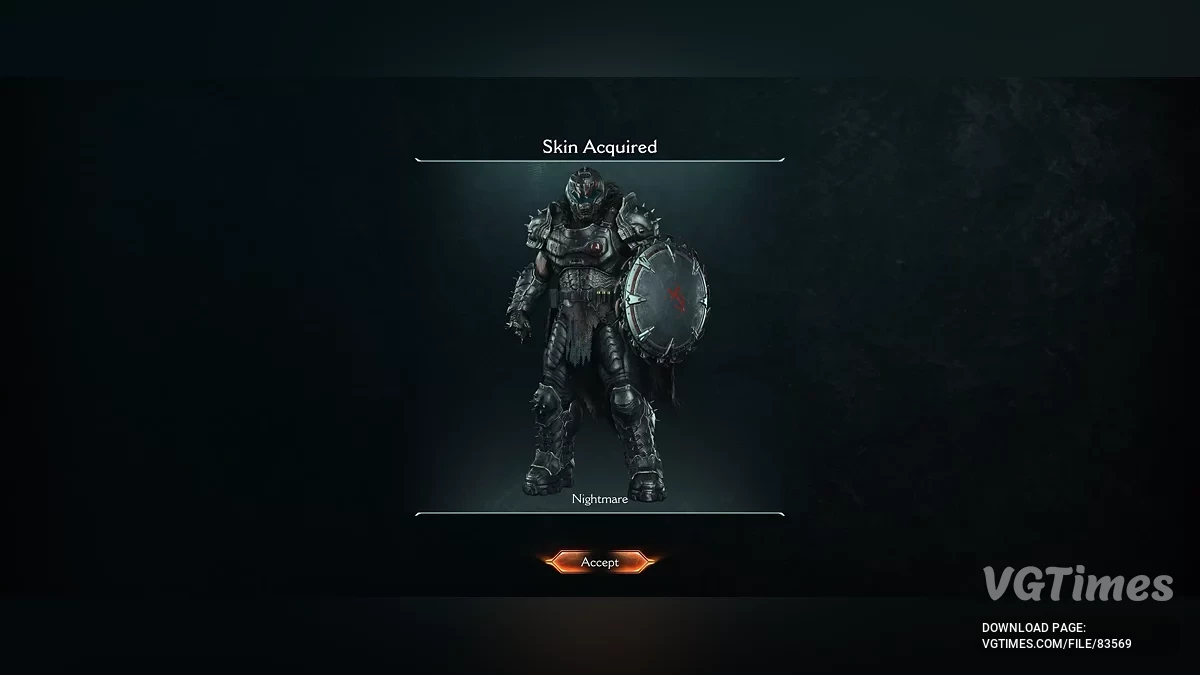
The main innovation is the universal shield-saw, which has replaced the classic chainsaw as the primary combat control tool. It serves both for defense and parrying attacks (using a timing system), as well as for offense: the shield can be used in close combat or thrown at enemies, after which it returns to the Executioner, similar to the legendary hammer of Thor. Besides battles, the shield helps in solving puzzles, such as cutting chains. The arsenal is complemented by three auxiliary weapons — a mace, a chain, and a power glove, which allow players to literally knock necessary resources from demons in the heat of battle.
New types of melee weapons are also introduced: a chain for breaking armor and shields, a massive spiked mace that restores resources, and a glove with a stun gun that allows for quick combo attacks. The lineup of firearms has been expanded with samples that fit the techno-medieval theme: the Skullbreaker minigun, which fires bone shards, the Piercer (nail gun), and the Chain Shot — a projectile that attaches to a chain.
The Dark Ages Bestiary

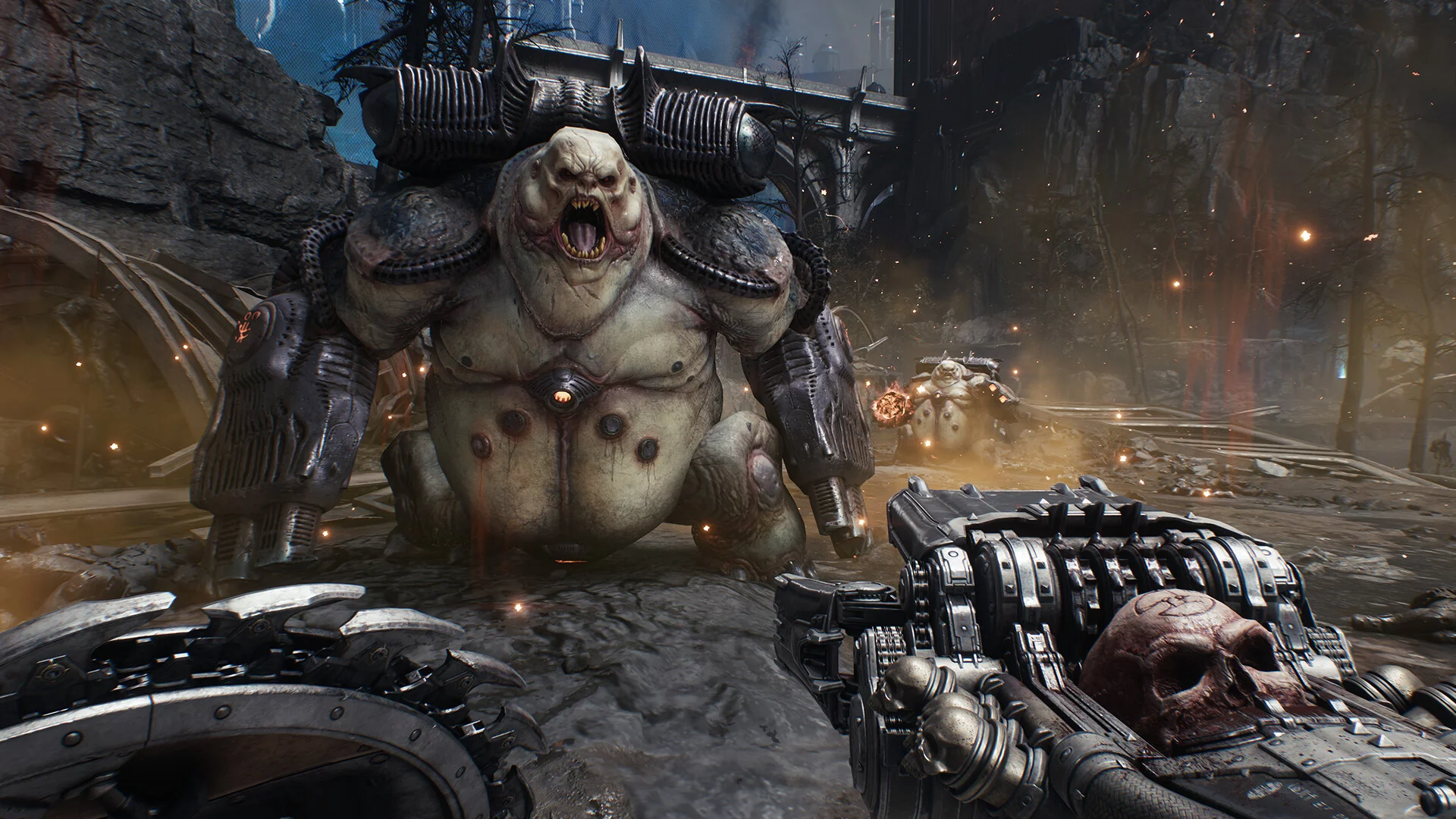
The game's bestiary includes over 35 enemies, combining classic Doom (2016) and Eternal demons with entirely new threats. Familiar to fans, Imps, Arachnotrons, and Lost Souls appear in a revamped design adapted to the harsh medieval aesthetic. However, the main innovation is the mechanized enemies and heavy hellish machinery, turning each encounter into a large-scale battle involving not only flesh but also steel.
Among the new enemies are massive crab-like creatures and floating cultists. The game features sub-bosses — enhanced opponents with a squad of subordinates. Defeating them requires first eliminating the entire entourage. Full-fledged bosses are also promised, each with unique combat patterns and mechanics. These battles are integrated into the campaign and can occur in both mandatory and side missions.
Single Player
For the first time in the series, players have the opportunity to control vehicles. Among them are the cybernetic fire-breathing dragon Winterin (Serrat) and the giant 30-story battle mech Atlan, available in separate episodes of the campaign.
The upgrade system allows players to accumulate resources and direct them towards enhancing the weapons and abilities of the Executioner, strengthening individual play styles and providing room for tactical adaptation.
New customizable difficulty settings have been added: players can adjust the timing windows for projectile parrying, overall gameplay speed, and other elements, tailoring the game to their reaction time and quality of gameplay.
All these changes signify a shift towards a more methodical and dense combat style. Now, frontal pressure and complete control over the arena are prioritized. Mastery of the chainsaw shield and understanding of level geometry allow players not just to survive, but to literally grind through enemy ranks, choosing between devastating attacks and impenetrable defense.
Key features:
- The PlayStation version supports DualSense haptic feedback;
- Multiplayer mode is absent, as the developers focused on the single-player campaign;
- The game includes modes for colorblind players and customizable interface elements, providing a more inclusive experience;
- The soundtrack is created by the duo Finishing Move, who crafted a dark and dense industrial score for the game. The music emphasizes atmospheric ambient during exploration moments and dynamically shifts to heavy metal riffs during battles;
- Unlike the aggressive rhythmic accompaniment of previous installments, the musical landscape of The Dark Ages has become more languid and atmospheric. The focus has shifted to ambient sounds and environmental sound effects, enhancing the feeling of being in the epicenter of a grim medieval war.

The Dark Ages is different from both previous entries in the series and any other shooter on the market. The shield makes the familiar mechanics feel new, but it's still fun to play. Fans of the genre simply must check out the new Doom.
Trailers, gameplay, and other videos


Store Offers and Discounts
![DOOM: The Dark Ages (PS5) (Account) [Global] [Standard]](https://files.vgtimes.com/si/shop_123547300.webp)
![DOOM: The Dark Ages (PC) [Global] [Standard]](https://files.vgtimes.com/si/shop_137515963.webp)


System requirements and PC test
- Windows 10 64-Bit
- CPU: Intel Core i7-10700K
- RAM: 16 GB
- Free Space: 100 GB
- VRAM: 8 GB
- Video Card: GeForce RTX 2060 SUPER; Radeon RX 6600
- Keyboard, Mouse
- Windows 10 64-Bit
- CPU: Intel Core i7-12700K; AMD Ryzen 7 5700X
- RAM: 32 GB
- Free Space: 100 GB
- VRAM: 10 GB
- Video Card: GeForce RTX 3080; Radeon RX 6800
- Keyboard, Mouse
News
-
 Resident Evil Requiem has been fully hacked: bypassing Denuvo protection is possible without a hypervisor
 -
 Fans of racing, get your wallets ready: limited edition gamepad and headset for Xbox will be released with Forza Horizon 6
 -
 Denuvo Defeated Again: Doom: The Dark Ages Has Been Cracked
 -
 DOOM: The Dark Ages DLC Nears Finish Line as Hugo Teases Sequel‑Sized Campaign and Brutal Endgame Content
 -
 Hugo Martin Confirms Khan Maykr’s Comeback in DOOM: The Dark Ages Expansion
 -
 New DOOM: The Dark Ages DLC Details: Metroidvania Design, Secret Lore Weapon, and Arch-vile’s Return
 -
 2026 DICE Awards Nominees Revealed
 -
 Most Successful Games of 2025 on Steam Revealed
 -
 Metacritic Unveils Top 20 Best Xbox Games of 2025
 -
+ 83 news